ABOUT US: At Renovation Realty, we know the latest design trends that home buyers gravitate to, and as a licensed contractor we implement improvements that make homes sell for top dollar. As a licensed realtor with a background in architecture, I bring a unique expertise and experience to clients. - Edward Borlenghi, Agent + Consultant - Direct phone: 858-692-5478

MAP OF GREATER SAN DIEGO

MAP OF GREATER SAN DIEGO
Showing posts with label Architectural Styles and Methods. Show all posts

Victorian Style in San Diego

When I think of San Diego architecture, the Spanish style and the early settlement history in the Old Town area come to mind first. Then I recall that I've seen other influences from the past around town as well.

From SanDiegoHistory.org:  "In the mid 1880s many of the more noted styles of Victorian architecture began to be built in San Diego. Lacy Queen Anne tower houses, tall narrow stick style, and classic Italianates dressed up the drab, dusty landscape of the outpost city."


Info from inetours.com about Heritage Park in San Diego tells of a rich architectural history. To improve the experience for visitors seeking an immersive cultural voyage in time, the county created an 8 acre park for the homes. According to the article, "seven buildings were acquired and relocated to Heritage Park over a period of 25 years."


When I think about it, an old home is like an old car. Sometimes old cars are fixed up to both look and run well. Typically this only has purpose when the old car is considered a classic. I happen to be partial to both the old Mustangs and Corvettes... the timeless muscle car appeal that proves to be difficult to replicate.  An old home is only worth relocating if it has historical significance and has not experienced too much obsolescence.  We all know the damage that time and wear can reap upon a wood-frame home, but restoration specialists can help turn back the clock. Hats off to owners and developers that see the intangible value in history, and set the pace for historic-architecture appreciation.

Although not in San Diego, this video shows an interesting look at how a home is relocated:


Energy Efficient Systems

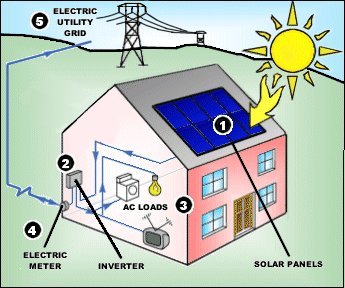
For decades now, there's been a gradual transition towards energy efficiency in the home. This is appealing to the home owner because it directly relates to lower operating costs, i.e. lower monthly bills. As solar power technology has improved over the years, more home owners are seeing the benefit to such a capital improvement to their home. Moreover, local energy companies not only provide rebates for energy efficiency in the home, but may be spearheading legislative shifts that require it in all new construction in the near future.

For now, homeowners can update their home with energy efficient methodologies as outlined at the EnergyStar website. There are a variety of systems that can be put in place to begin a path towards lower energy bills.

As for the Photovoltaic movement, it's about time we as a culture cultivate the renewable resource we call sunshine. As long as the earth continues its orbit around the sun, the abundant resource is available to us. Call it a modern tribute to what our ancient ancestors referred to as the Sun God.


Spanish Californian Architecture

Many of us know that California construction has its roots in the Missions built by the early Spanish Missionaries throughout much of the State.  In homage to this historical foundation, many architects and builders use the Spanish style as inspiration for their designs and developments.


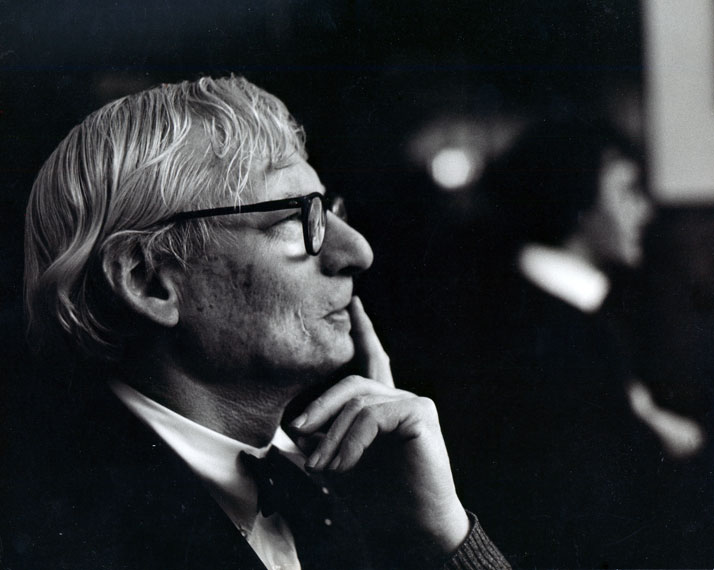
Personally, I appreciate this gesture, but there is a fundamental functional component missing from the equation: An arch was born from stone masonry rising from a column and arching to meet an adjacent arching column, meeting at the keystone in the center of the arch. Such a form was born naturally out of the attributes of the material. The great architect Louis Kahn (who designed the Salk Institute in La Jolla, San Diego, among many other works) said: A brick wants to be an arch.


There is, therefore, a particular beauty in such a built expression. In contrast, the newly-built representations of the spanish style by current builders form the arch not by the merits of the material, but rather via a copy-cat appearance using stud framing and plywood. The merits of wood frame construction shine through in the post-and-beam style of architecture, since members are straight and have good compression qualities in the column (post) and both compression and tension qualities in the beam - where the top half of the beam is in compression and the bottom half is in tension, due to the flexion of the member. So when I drive by a new development and see arches formed out of plywood, I regard it somewhat apathetically.


Unfortunately, since California is in Zone 4 for earthquakes (highest hazard), masonry arches can be regarded as unsafe. Typically we see masonry, such as concrete block, forming rectilinear openings since the open cells within the material are filled with rebar to provide resistance to destruction due to earth movement. Regardless, the Spanish style is here to stay, as a memorial to California history, and will always be built using today's construction methods, even if there's a touch of deception in the bones of the finished product.

Craftsman Style

By and large, the craftsman style of architecture dominates much of the San Diego residential built environment. Often times, the original 1950's home is updated by a real estate investor (commonly referred to as a Flipper), yet there is also a move to create new homes in the craftsman style.


This article from Houzz has more photos that demonstrate the movement.

Straw Bale Construction

When I was in Architecture school getting my undergraduate degree in San Luis Obispo, the idea of using straw bales as part of a wall construction was on everybody's mind. Clearly, straw bales don't have structural qualities, but they have excellent thermal characteristics. Additionally, they are an environmentally-friendly material because almost no carbon emissions are generated in their creation.

Sustainable building methods have been around for decades, but it seems that fully employing them isn't economically viable. For example, solar panels are finally starting to catch on now that manufacturers have managed to get the prices down, even though they've been available to builders for many, many years.

For more about Straw Bale Construction, read this.